The Next Step in My Journey: Why Articles, and Why Now
The First Post
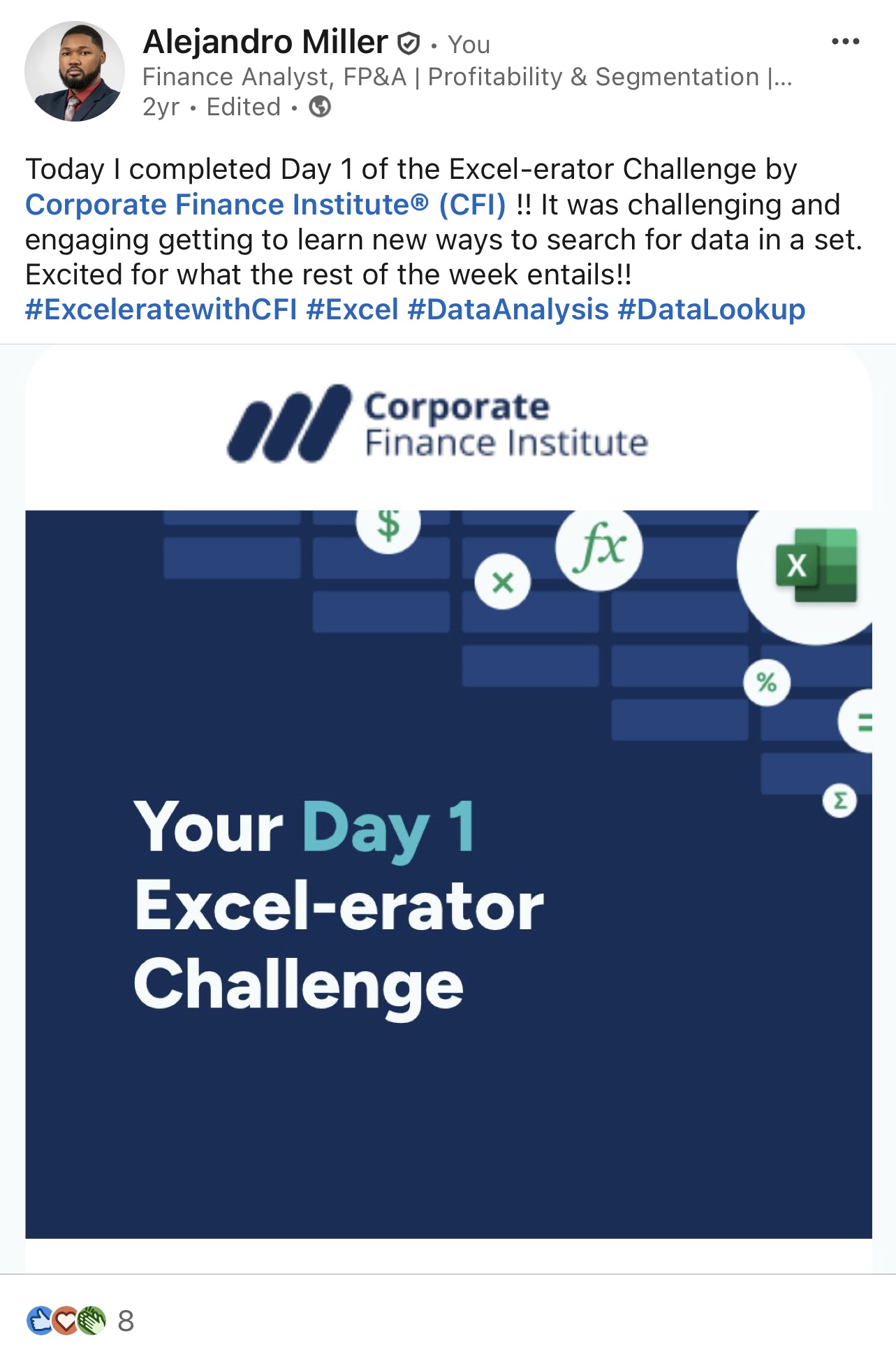
In 2023, all I had to post was an Excel challenge screenshot and no idea if anyone would care. I’d had a LinkedIn profile for a decade but never used it. I knew the platform was a different space for professionals to talk about their work, but I didn’t know what people were looking for. I was only connected to high school classmates and family.
Then CFI launched an Excel-erator challenge: seven days of short exercises to test your skills. I signed up, excited to see if CFI was the right fit. When the Day 1 email arrived, I screenshotted it and posted it. That was my first post ever—a tiny snippet of my journey. I had no idea where it would lead.
Learning the Platform
I watched YouTube videos about building a strong LinkedIn profile. Creators like Jeff Su and Kenji Explains showed me how. I didn’t know how to describe my work to someone outside the role. It took time and many rewrites. Their advice helped me grasp what a profile should communicate. I wrote a summary for the About section and even made a banner in Canva, which I updated several times over the years.
I also studied how others posted. I noted what grabbed my attention and learned what to avoid from the ones I scrolled past. It was never about how long the post was, just whether it was engaging. I still didn’t know if I had a voice worth hearing, but I figured I have nothing to lose. Either people engage, or I keep enjoying my small corner with my small wins.
Finding Courage to Connect
I started finding former coworkers on LinkedIn and decided to reach out. It felt like friending someone on Facebook. Sending a request to someone two grades ahead I’d never really spoken to felt just as nerve-wracking. Sure, we’d had a nice conversation over the phone. But did that mean they wanted to connect on a professional platform? To my surprise, many accepted. I felt emboldened.
At the time, I regularly brought documents to the CFO and President for signature. We’d chat briefly while they signed. I didn’t dare connect with them at first. Eventually I told myself, the worst they can do is reject the invitation and then I’ll know I reached too far. They accepted almost immediately. That quiet acknowledgment from the top felt significant.
Earning a Voice
I stayed in the Data Processor role longer than I wanted to. The pressure was intense, and I made a quiet promise to myself: if I stay long enough, I can learn more than most. I would build the determination and resilience that would carry me through my career. So far, that has held true. No role since has come close to that pressure. It shaped me. It also gave me insights I had nowhere to share.
Then I noticed LinkedIn’s collaborative articles. The platform invited users to answer professional questions. I had experiences that might benefit someone else, so I started contributing on topics I knew well. Before I fully understood what was happening, I earned the ‘Top Data Entry Voice’ badge. I felt like I had something to say. It was a quiet validation. A second badge followed, for Analytics. Then I stopped.
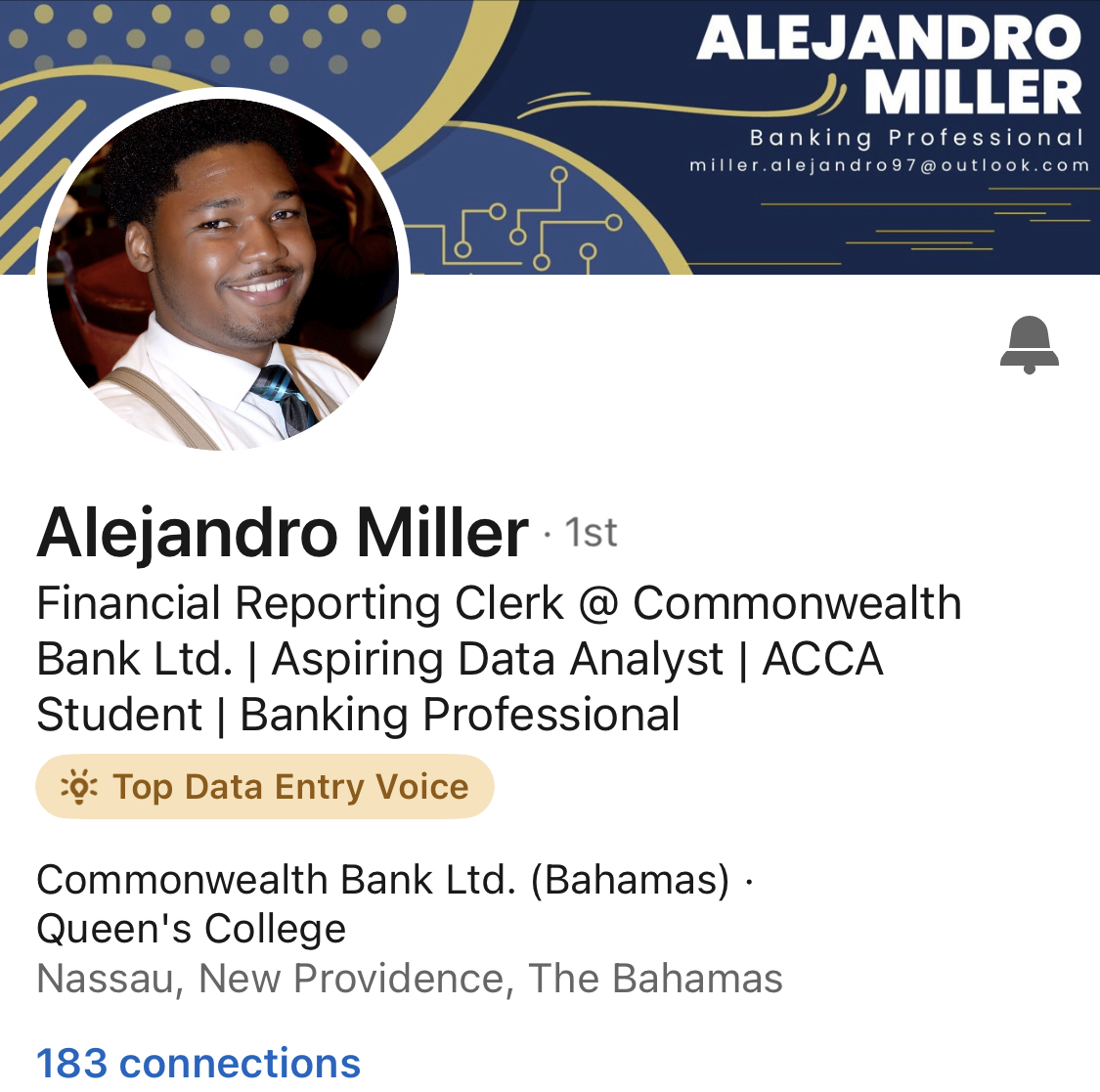
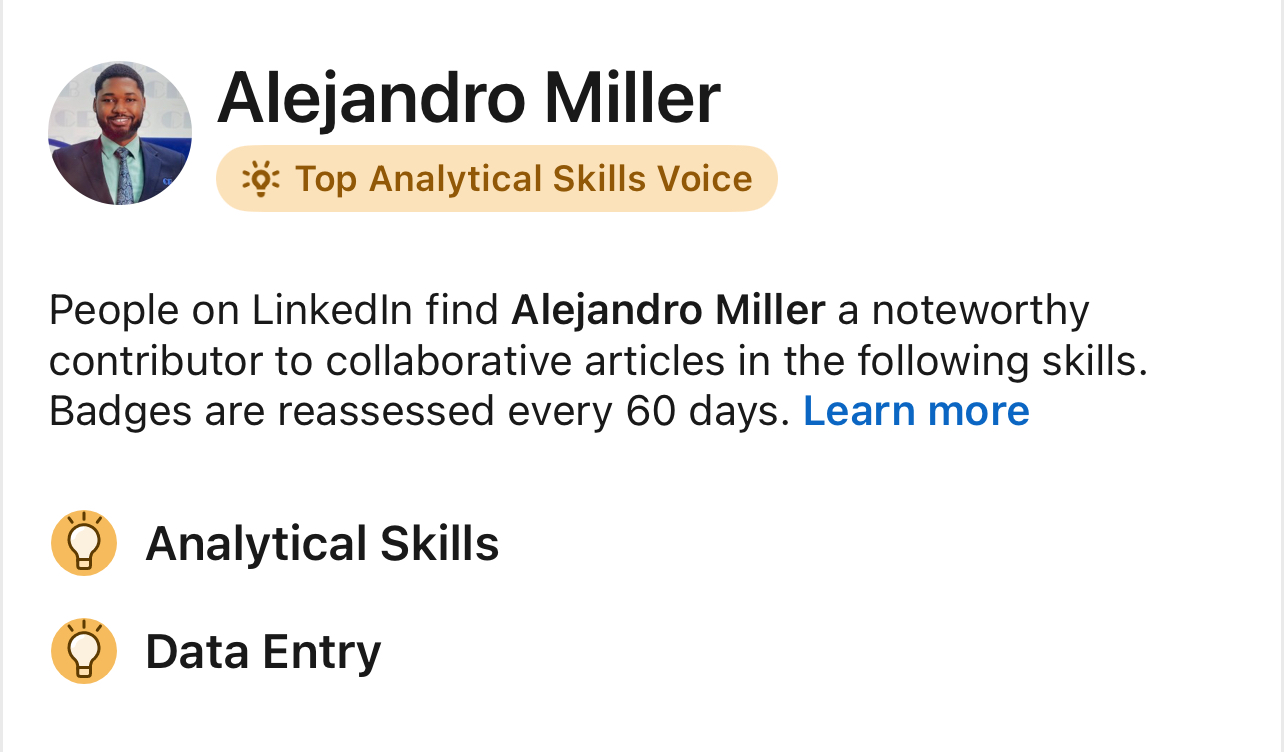
I didn’t have anything fresh to add, and I didn’t want to repeat myself just to keep a badge. I held them while I had something to say, and for a season, that was beautiful. I trusted that more experience would give me more to say later. It did.
The 5 Year Anniversary Post
When I reached my five-year anniversary at the bank, I paused to reflect. I wanted to look back on the journey and share what I’d learned. I wrote a post outlining a few principles that had carried me through.
Every post before had earned between two and ten interactions. One of those was always my wife, who I made like every post. This time was different. The post reached over ninety interactions and ten comments. Some were from people I didn’t follow or know, second and third-degree connections I’d never engaged with. Then the CFO commented. We had connected on the platform, but I hadn’t expected she would pay attention. I always kept a professional distance. I didn’t want to disturb senior leaders with my small posts.
That moment shifted something. I began to see I had more to offer than I’d believed. Until then, my posts were simple announcements. A course completed, here and there. After the anniversary post, I didn’t try to catch lightning twice. I sat with it and let it simmer. I wanted to understand why it worked, not replicate a formula.
Professional Recognition
After that, my posts returned to normal. A new course and three to five interactions. Then my hard work began to bear fruit. I passed my first ACCA Foundations exam and completed the FMVA certification. Neither post matched the anniversary reach, but both performed better than usual. Then the President commented. That made it special.
Shortly after, I was promoted to supervisor, acting for six months of training. I never imagined that it would be possible for me. I had no degree. I felt like just another run-of-the-mill worker. Seeing my learning applied on the job and my simple posts gaining recognition signaled that I was doing something right. When I brought journals for signature, the President would occasionally say, “I see you working hard with the courses. Keep it up.” Even without engaging online, my posts were reaching people. That quiet observation from the top stayed with me.
Building a Community
My goal was to become a Data Analyst, so I followed creators in that space. I absorbed concepts I hadn’t covered in my courses yet. When my learning caught up, I could finally join the conversation. I started to feel part of a community. I also searched for analysts from The Bahamas, hoping to find local inspiration.
Slowly, I found my voice. I began to develop what I now recognize as my brand: thoughtful, reflective, and insightful. I didn’t force posts. When I had something to say, I said it. I also helped build a small local community of data enthusiasts. We met once a month to talk through our projects and share what we were working on. One block at a time, that community grew.
Another shift came after the HBS Online Leadership Principles course. I networked hard. I found everyone from my cohort on LinkedIn and connected. The fear of reaching out had disappeared. Everyone was free game. They could accept or reject. Either way, I was okay with where I was. My following grew. My feed filled with leaders across industries and continents. Seeing thoughtful posts, not engagement bait, felt like finding my larger community. Others who used the platform the way I hoped to. It felt right.
Why Articles Now
Watching my growth on the platform and in my career, something still felt missing. I’ve been here before. At year five, I had something to share. When I first joined LinkedIn, I had never posted, but I did it anyway. No strategy. No engagement. Just a screenshot and a question mark.
Now I’m entering a new chapter. All those paths—the late-night course completions, the small posts, the community that grew around honest conversation—converge here. I’m evolving into a different professional, and I need a different platform. That’s why I’m writing articles.
Posts force me to condense. Articles let me unfold an idea fully. They sit quietly on a page, ready to be revisited. No algorithm demands. No character limits. I can share insights as they come and build toward the professional I see in the distance. I’m not there yet. This feels like the next step in getting there.
I’m a rookie at this. I’ll get some things wrong and learn in public. That’s part of the design. I’ll be sharing lessons from finance, systems thinking, and the slow art of building a career that lasts. No hustle talk. Just honest reflections.
So, join me if you’d like. Read when it suits you. Engage or don’t. I’m not writing to become a writer. I’m writing because I have something to say. When that feeling fades, so will the articles. For now, I’ve got something to say, and this is how I want to say it.
Disclaimer: The views expressed in this article are my own and do not reflect the official policy or position of my employer or any of its affiliates.